

Trump's $2,000 Tariff Dividend: A Glimpse into a Radically Empowered Future?
Okay, folks, let's dive into something that's got my circuits buzzing: President Trump's recent suggestion of $2,000 tariff dividend checks for many Americans. Now, I know what some of you are thinking: "Another political promise?" But hold on a second. Let's zoom out and look at the potential here, the possibility of a future where economic benefits are directly tied to policy in a tangible, immediate way.
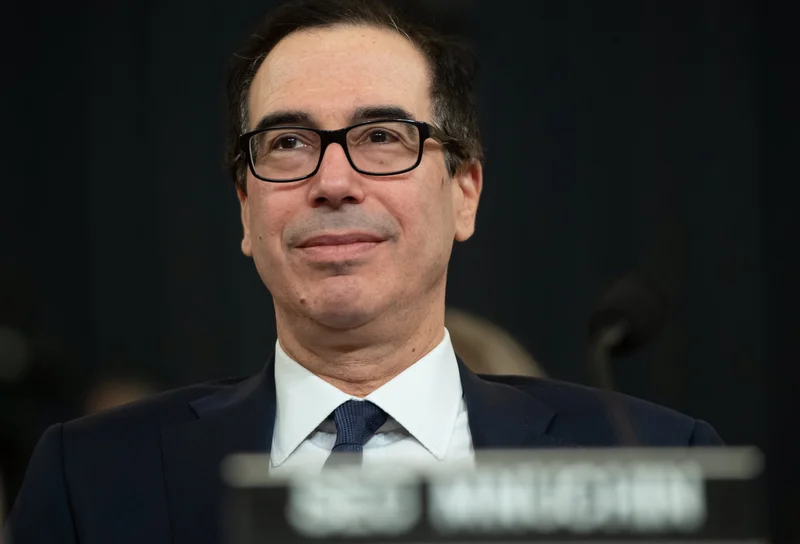
Imagine this: You see a tariff implemented, and a few months later, boom, a check arrives in the mail (or, more likely, a direct deposit notification pings your phone). It's not just some abstract economic theory anymore; it's real money, directly linked to a specific policy decision. Treasury Secretary Bessent's suggestion that these dividends could be funded through tax cuts, like eliminating taxes on tips or overtime, just adds another layer of fascinating complexity to the equation. This isn't just about economics; it's about a new kind of fiscal transparency, a direct line between policy and personal prosperity.
The Trump administration has already collected billions in tariff revenue – $214.9 billion so far this year alone, with $31.3 billion in September. Now, I know the Supreme Court is debating the legality of these tariffs, and that's a critical discussion to have. But, let's put aside the legal wrangling for a moment and focus on the potential of this model. What if we could use tariffs, not just as a tool for trade negotiation, but as a mechanism for directly benefiting the people affected by them? I mean, this could be a paradigm shift in how we think about government revenue and wealth distribution, right?
It's not a completely new idea, of course. We've seen stimulus checks before, like the ones Trump discussed last month, potentially ranging from $1,000 to $2,000. And who can forget the earlier discussions with Elon Musk about $5,000 checks funded by federal cost savings? That plan didn't pan out, but the seed of the idea – directly connecting government efficiency with citizen benefit – was planted. This is the kind of thinking that gets me excited! When I think about where this could take us, I'm reminded of the Renaissance. It was a time when new ideas, new technologies (like the printing press!), and new ways of thinking transformed society. Could this be a similar moment for economics?
Now, I'm not saying this is a perfect solution. There are definitely questions to be asked: How do we ensure fairness in distribution? How do we prevent unintended consequences? And, perhaps most importantly, how do we ensure that these policies are sustainable and not just short-term fixes? But, I believe these are questions worth exploring, challenges worth tackling. Because the potential reward – a more transparent, more responsive, and more equitable economic system – is simply too great to ignore. It’s a bit like the early days of the internet, people were worried about security and privacy, but the potential for connection and information sharing was too revolutionary to ignore. Trump has mentioned the possibility of similar checks in 2025 Tariff dividend: What Trump is again saying about possible 2025 stimulus checks - LiveNOW from FOX.
A Future Where Policy Directly Empowers People
This isn't just about a $2,000 check. It's about a fundamental shift in how we understand the relationship between government and the individual. It's about empowering people to see the direct impact of policy decisions on their lives. It’s about the potential for a new era of economic engagement, where citizens are not just passive recipients of government programs, but active participants in shaping their own economic destinies. And, frankly, that's a future I'm incredibly excited to see unfold.